My April Integration Story: When Growth Feels Like Falling Apart

I started April already feeling drained — emotionally raw, heavy, and confused. It was like my heart was still catching up to all the changes I had been making. I knew this month was supposed to be about integration — that’s what the energy reading at the beginning of the month said. April was meant to help me bring all my parts back together, to move from fragmentation into wholeness. I thought that would feel peaceful, empowering. I thought I’d be soaring by now.

Instead, it felt like I was falling apart.

At the start of the month, I had big intentions. I wanted to use April to work out more, feel strong in my body, lose some weight before my trip at the end of the month. I was ready to take action. But right around my birthday, I got hit with food poisoning out of nowhere. I had no choice but to slow down and surrender. It was a moment that made me realize just how much I do for others — how often I put myself last. And for the first time in a long time, I wished for something simple: peace.

The whole month, I found myself asking: Why is this so hard?
Choosing myself — choosing rest, choosing gentleness — felt heavier than I ever imagined. I thought freedom would feel light, happy, expansive. Instead, it felt like grief. Like standing in the ruins of old versions of myself.

And when the rubble cleared, the parts of me that stepped forward shocked me.

I didn’t meet the free-spirited, peaceful version of myself I expected. I didn’t meet the “healed” shaman-self I thought would be waiting for me on the other side.
I met the critic.
I met the voice that tells me I’m lazy.
I met the part that demands I suck in my stomach at the beach, that whispers I’m not enough no matter how much I do.
I met the old judge — and instead of fighting her, I listened.

Integration, I learned, isn’t about becoming the perfect version of myself.
It’s about making room for all the parts of me I tried to exile.

It’s about seeing my anger, my exhaustion, my inner critic — and letting them have a seat at the table, without letting them run the show.

April was hard because true integration is not about transcendence. It’s about embodiment.
It’s about bringing the rejected parts back into the heart of who I am.

Not to glorify them.
Not to obey them.
But to love them back into wholeness.

As this month closes, I realize:
I’m not falling apart.
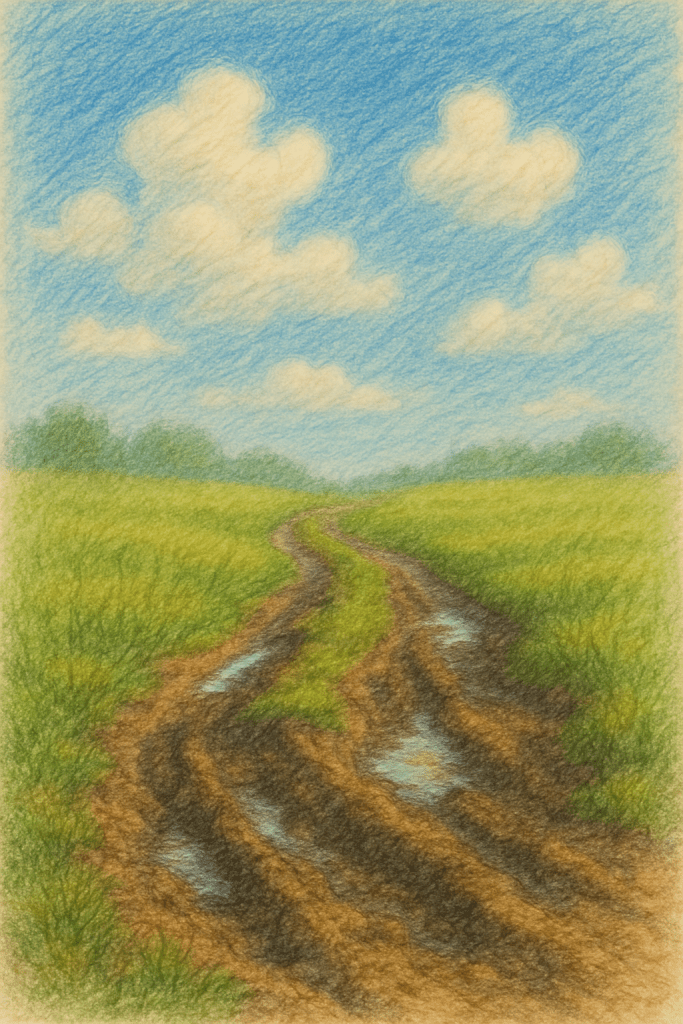
I’m not falling apart and
I’m not soaring away.
I’m falling deeper into myself — into the parts that used to scare me.
Even though the ground feels muddy, I’m not afraid to keep walking.
Something in me has changed.
I don’t have all the answers, but I trust myself enough to stay.
I’m grateful I sat with myself through it all.
And that makes me stronger than I’ve ever been.


Food as a Portal: Connecting to the Past Through Taste

It started with a bite.

Crispy, salty, tangy—the flavors hit my tongue, and suddenly, I wasn’t just sitting there eating a Filet-O-Fish. I was somewhere else. Somewhere familiar.

I was back in my hometown, inside the Walmart where my mom used to take me as a kid. There was a McDonald’s inside, and because it was Lent, we got the Filet-O-Fish. It was a rare treat. As immigrants, we didn’t eat out often, not even at fast food places like McDonald’s. But on that day, we sat together, unwrapping the warm sandwich, dipping fries into ketchup, and sharing a simple meal.

And years later, a single bite transported me back.

It wasn’t just nostalgia. It was something deeper. A tether between past and present, a connection I could feel in my body.

Nowadays, I don’t eat fast food often, and I almost never order a Filet-O-Fish. In spiritual spaces, fast food is often dismissed as “low vibrational,” something to avoid. And I get it. I grew up picking corn and beans straight from the fields—I know the taste of real, fresh food, the kind that nourishes not just the body but the spirit. I also understand the concerns about processed foods, artificial ingredients, and the impact of what we consume. A Big Mac and an apple from a tree are not the same.

But what bothers me is the judgment.

There’s this idea that spirituality and fast food don’t mix, that eating “low-energy” food somehow makes a person less enlightened. But is that really true? Would people think differently of the Dalai Lama if he ate a Baconator once a week? What if he drank a bottle of wine every night? Would that change how they viewed his wisdom?

I have no idea what the Dalai Lama eats, but I’d bet he doesn’t frequent McDonald’s. Still, does that mean his spiritual depth depends on his diet?

This kind of thinking is a trap—a trap of ego, of judgment, of false superiority. Because the truth is, spirituality isn’t about what you eat. It’s about awareness, connection, and presence. And that’s exactly what I felt as I sat there eating that sandwich.

With every bite, I was reliving that moment with my mom. I could feel the warmth of that memory, as if I were there again, as if time had folded in on itself. A surge of energy shot through me, something so profound that I still feel chills writing about it.

Food is more than just nourishment. It’s a bridge.

If a simple sandwich could connect me to my past self, then food can connect us to our ancestors, too.

For me, eating pierogies brings me back to my grandmother. I can still see her in the kitchen, her hands moving quickly, shaping dough into small discs, filling them with potatoes and cheese. I remember the mountain of flour on the table, the rhythmic pressing of each pierogi shut. And when I eat them now, I feel her presence. I feel my ancestors, even the ones I never met.

Food carries memory. It carries energy. It carries love.

So maybe it’s not about whether food is “high vibration” or “low vibration.” Maybe the real question is: what does this food connect you to?

The Shift from Proving to Listening

I’ve been thinking a lot about how organized religion and science have something in common.

Both often insist there’s only one right way to the truth.
Only one path worth following.
Both can refuse to acknowledge that life—and the universe—is so much bigger than them.

Lately, I’ve been working with the energy of fire.
What it means to embody it.
And the more I sit with that, the more I realize how much fire has shaped me—both the wild, untamed flames of my younger years and the steadier light I’m learning to hold now.

I’ve been reading Becoming Supernatural by Dr. Joe Dispenza. It’s fascinating—he talks about how our thoughts create our reality, how energy shapes matter, and how we can literally heal ourselves through intention and focus.
And while a lot of it resonates with me, I kept catching myself thinking…
People have known this.
We’ve understood these things for thousands of years.
It’s not exactly new.
But I still felt that old flicker of irritation.
That spark of anger when scientists present these ideas like they’ve just discovered them—as if no one really knew until science came along to explain it.
As if science is the only way to make something real.

And there it was again—my fire.
That same intensity I’ve carried for years.
The need to stand for something, to defend what I know, to burn through what feels wrong.
But I sat with it.
Why does this still bother me? Why does it ignite something in me?

And then it hit me.
It’s the same kind of closed-mindedness I used to feel in church.
That attitude, whether it comes from religion or science, where people believe they’ve found the truth—and everyone else is lost.
They think they have the answers.
They act superior.
And really, it’s just one perspective.
One path.
What gets to me isn’t that they have their way—it’s the belief that theirs is the best, or the only, way.

When I was in middle school, I had a friend named Angie.
We used to hang out after school, and one day we ended up talking about religion. She was a Seventh-day Adventist—or something close to it. I don’t fully remember. But I do remember how I acted.
I told her about my beliefs. About Jesus. And I was so sure of myself.
Like my religion was the only true path.
Like I was somehow more righteous, more “saved.”
Looking back, I can feel the heat of my own certainty.
The fire in me that wanted to be right.
I thought I had the truth, and I wanted to light the world on fire with it.

And then there was that summer when I was ten, visiting my dad’s parents in Ukraine.
They had converted to a different branch of Christianity.
As a Catholic kid, anything outside of the Roman Catholic Church felt strange to me.
And honestly, back then, I was worried it was something extreme—maybe something like Jehovah’s Witnesses.
I realize now it wasn’t, but at the time, all I could feel was the discomfort of something unfamiliar.
Something that challenged my view of the world.

One afternoon, while we were talking about Jesus, my grandma said, “Jesus wasn’t Catholic. That came later.”
And I, with all my fiery pride, said, “Well, Catholicism follows his true teachings.”
I thought I was making a point.
Later, I told my Babcia about the conversation, feeling proud of myself, like I’d won something.
But now? I feel a little ashamed.
Ashamed that I was so quick to shut the door.
That I let my fire burn too hot, without making space to listen.
I wish I had asked my grandma more about her faith.
I wish I had been curious about her experience.
Instead, I wanted to prove something.

Those moments taught me about fire.
How powerful it is.
How it can bring warmth and light—or destroy and divide.

Back then, my fire was all about proving I was right.
Defending my beliefs.
Burning through doubt with certainty.
But now I’m learning a different kind of fire.
The kind that stays steady.
That offers light without scorching.
That makes space for others to gather around.

So why am I judging now?
Why am I getting frustrated with scientists for doing exactly what I used to do—believing their way is the way?

Maybe this is another lesson in how to tend my fire.
Not to snuff it out—but to let it glow, steady and open.
To stay curious.
To remember that there’s more than one path.
More than one truth.
And that my fire doesn’t have to prove anything to anyone.
It just has to burn true.

Tending the Inner Flame: What I Learned About Embodiment

There are moments on our spiritual journey that arrive quietly, without fanfare, and yet they reshape us from the inside out. Recently, I found myself in one of those moments—and it changed everything.

For weeks, I had been working with the energy of March, calling it a time of creative firepurpose, and vision. But if I’m honest, I didn’t fully understand what those words meant when I first wrote them down. They sounded nice. Inspiring. Maybe even a little generic.

Now I see. Now I feel the fire.
It’s the Inner Flame. And it’s been burning inside me all along.


February: A Sacred Song

February was about music. I followed the call to sing when I cooked, to sing into my water before drinking, to attend a choir show, to stand in front of an ancient image at the MET that stirred something deep in me.
Music became a way to open my heart, to tune my energy, and to connect with something greater.

Looking back, I realize February’s song was preparing me. It was tuning my instrument, setting the frequency for the next phase. That phase is March, and its invitation is clear:
Tend the Inner Flame.


March: Embodying the Inner Flame

I expected March to be intense—wild action, big moves, fiery transformations.
Instead, the fire came in an unexpected way.
It arrived as steady presenceembodiment, and ritual.
I found myself moving my body through regular workouts. Stress softened. Life felt calmer. I wasn’t running from anything or chasing anything.
For the first time in a while, I felt okay.
Like the stillness after a storm.
Like I was finally tending my own flame, rather than looking for a spark outside of myself.

I lit candles for myself, for my ancestors, for others.
I journaled. I meditated. I was present with simple daily tasks.
This was the fire—not destructive, but sustaining.
Not raging, but steady.
hearth fire, one that keeps the home warm and the heart open.


The Sacred Fire of March

Now I understand what March was always about.

  • February opened my heart through music and vibration.
  • March is preparing my body and life to embody the Inner Flame, to live it, not just imagine it.
  • This is the fire that sustains, that nourishes, that empowers.
    It’s not a wild blaze. It’s the steady flame I tend every day—with movement, presence, and purpose.

A Poem for the Inner Flame

I am the one who finds you in loss and leads you to victory.
I am your inner fire, your courage, your forward movement.
I walk with those who dare to rise after they have fallen.
I am your vision lifted high, your wings spread wide.
As you walk forward, I ride beside you.
I am the flame that shows you how to rule your life as a king.


Final Reflection

If you’re feeling stuck, or if you’ve been waiting for the next spark, know this:
You are already the Inner Flame.
The work isn’t to find the fire—it’s to tend it.
Tend it in your body.
Tend it in your life.
Tend it in your rituals.

Light the candle. Move your body. Be present.

The Art of Letting Go (When It’s the Hardest Thing to Do)

I’ve always prided myself on being someone who can let go.

People. Places. Things that once made me happy.

I’ve walked away from things before—without looking back. Not because I wanted something new, but because I learned early on how to let go. I took pride in being strong enough to move on.

But lately, I’ve been clinging to something. And I don’t understand why.

It reminds me of something that happened in high school.
I quit the volleyball team after junior year. My best friend was furious. We’d started on the team together as freshmen, but her experience was different from mine. She was fast, athletic. Me? I was a little slow. I had good hands, but my body just didn’t move fast enough. I didn’t get a lot of play time. And when I did, I was a ball of nerves. I got anxious about serving the ball. The simple stuff.

Then we got a new coach our junior year. He did things differently—he broke the game down into drills, played us videos, explained strategy. He even gave us a test. And I aced it. He told me I understood volleyball better than anyone else on the team.
But I still couldn’t get my body there.
I agreed with him.
And looking back now, I wish someone had explained that it was simply a matter of training. That I could have worked at it. Conditioned. Strengthened.
But at the time, I was working after school at a pizza shop. My family was going through some things. I didn’t have the energy to sit on the bench every game, watching my teammates play and feeling like shit because I wasn’t better.
So I quit.
And sure, it was sad to lose the team, the bus rides, the friends. But I had grown-up shit to deal with. And I made peace with it.

Now here I am, years later, dealing with grown-up shit again.

And I find myself clinging to this job.
I’ve come full circle with it—hated it, loved it, hated it again, and somehow, I’ve landed in a place where I kind of love it again. But I know it’s time to go.
I feel it.
And yet, something in me hangs on, claws in deep.
I don’t know why.
And honestly, I’m tired.
Tired of the push and pull. Tired of circling the decision. Tired of holding on when I know I need to let go.

I’ve been sitting with this for a while. Trying to figure it out.
And then last week, I pulled the Magician card in a reading.
The Magician pointed to the ground. The message was clear—it’s time to bring what I know down to earth. To live it. To embody it.


So I did.
I meditated. I journaled. I went for walks. I cleaned the house and tried to appreciate the mundane stuff. I thought a lot about what it means to embody something, instead of just knowing it.
Because I know it’s time to leave this job.
But I haven’t embodied that truth yet.
And I realized—it’s the same lesson I learned back on the volleyball court.
Knowing something isn’t the same as doing it.
Understanding the game isn’t the same as playing it.
Wanting change isn’t the same as living it.

Embodying is about grounding.
It’s about getting out of my head and into my body.
And the thing that would have helped me then—the thing that would have gotten me closer to who I wanted to be—was movement. Training. Showing up for myself, physically.
And I think that’s what will help me now.

I need to move.
Not just walk circles in my mind, but move my body.
Work out. Sweat. Breathe. Feel grounded in something real, something present.
Letting go isn’t just a mental decision—it’s something I have to do, fully, with my body and my actions.
And maybe writing this is part of that action.
Maybe this is me naming it.
Maybe this is me taking the first step.

Just because I’ve carried something for a long time doesn’t mean I have to carry it forever.
Just because I’ve built something here doesn’t mean I have to live inside of it.
It’s okay to walk away—even if I love it.
It’s okay to leave—even if I’m good at it.
It’s okay to outgrow a place that once fit me perfectly.

I’m ready for something new.
I’m ready to let go.
And this time, I’ll let my body lead the way.

Imperfect, But Enough: A Lesson on Teaching and Self-Doubt

I recently taught a law school class, and by the time it was over, I felt like I had completely failed. I walked away replaying everything in my mind, picking apart what I should have done differently. The class didn’t flow the way I wanted it to. I felt like I was talking at my students instead of engaging them. I rambled. I lost my focus.

But as I sat with the discomfort, I realized this class had taught me just as much as I was trying to teach the students. It forced me to confront something I’ve struggled with for a long time—perfectionism.

Perfectionism tells you that your worth is tied to how flawlessly you perform. It convinces you that if something isn’t done perfectly, then it’s not worth doing at all. And that belief? It’s exhausting.

1. The Perfectionist Trap: Always Trying to “Get It Right”

I went into this class wanting to nail it. I wanted to sound smart, to engage the students, to have all the answers. But when I started feeling like I was losing them, I panicked. Instead of stepping back and adjusting, I doubled down—I filled every silence with more facts, trying to prove that I knew what I was talking about.

That’s the perfectionist trap. When something isn’t going perfectly, perfectionists don’t pivot—they try harder, push more, force it. But in doing so, they lose presence, flow, and connection.

The irony? My class was about how society determines who is “deserving” and who isn’t. And yet, I was deciding that I didn’t deserve grace for my own mistakes.

2. Intimidation Is a Reflection of Our Own Self-Doubt

Another thing I didn’t expect? To feel intimidated by the students.

Before I even started teaching, they were discussing their work, sharing case updates, and sounding incredibly put together. And suddenly, I found myself thinking, What can I possibly teach them?

That moment taught me something profound: confidence doesn’t always mean certainty—it’s often just how people present themselves. And more importantly, I realized that I had likely been on the other side of this before. There have probably been times when people felt intimidated by me, assuming I knew more than I did simply because I sounded confident.

That hit me hard. Because the truth is, I’ve had moments where I felt jealous or insecure around others who seemed more competent than me, and I never fully understood why. But now I get it—it wasn’t jealousy. It was the fear that I wasn’t enough in comparison.

Realizing this made me reflect: If I can recognize that these students weren’t necessarily more knowledgeable—just more confident—then why can’t I extend that same understanding to myself?

3. You Can’t Push Away Insecurity—You Have to Work Through It

The worst thing I did in that class? I ignored my feelings instead of working through them.

When I started feeling intimidated, I pushed it aside. When I felt like I was losing the class, I forced my way through it. I was so determined to not let my emotions affect my teaching that they ended up taking over anyway.

That’s the thing about perfectionism—it tricks you into thinking that if you just push through hard enough, you can outwork your self-doubt. But that’s not how it works. When we don’t acknowledge our feelings, they find ways to surface.

If I could go back, I wouldn’t try to power through my insecurity. I’d pause, take a deep breath, and remind myself:

  • Feeling uncertain doesn’t mean I don’t belong.
  • I don’t need to have all the answers to be a good teacher.
  • My worth is not determined by one class, one moment, or one perceived mistake.

4. Teaching (and Life) Is About Holding Space, Not Being Perfect

Perfectionism tells us that our value comes from performance—that we have to be the bestthe most knowledgeablethe most put-together. But that’s not what teaching is about. And it’s not what life is about either.

I got so caught up in wanting to sound smart that I forgot the real goal of the class: creating a space where people can engage, think, and learn.

That means asking more questions instead of just giving answers. That means allowing moments of silence instead of rushing to fill them. That means accepting that some conversations will be messy and imperfect, and that’s okay.

If I had approached this class with less pressure to “get it right,” I probably would have been a better teacher. Because perfectionism doesn’t make us better—it just makes us more afraid of failing.

Final Thoughts: What I’m Taking With Me

  • Perfectionism doesn’t serve me. Letting go does.
  • Intimidation is often just our own self-doubt reflected back at us.
  • I don’t need to have all the answers to be valuable.
  • The best way to overcome self-doubt is to acknowledge it, not suppress it.

This class didn’t go the way I wanted it to. But maybe it went the way I needed it to.

Because at the end of the day, perfection isn’t the goal. Growth is. And that means allowing myself to be human, even when it’s uncomfortable.