Imperfect, But Enough: A Lesson on Teaching and Self-Doubt

I recently taught a law school class, and by the time it was over, I felt like I had completely failed. I walked away replaying everything in my mind, picking apart what I should have done differently. The class didn’t flow the way I wanted it to. I felt like I was talking at my students instead of engaging them. I rambled. I lost my focus.

But as I sat with the discomfort, I realized this class had taught me just as much as I was trying to teach the students. It forced me to confront something I’ve struggled with for a long time—perfectionism.

Perfectionism tells you that your worth is tied to how flawlessly you perform. It convinces you that if something isn’t done perfectly, then it’s not worth doing at all. And that belief? It’s exhausting.

1. The Perfectionist Trap: Always Trying to “Get It Right”

I went into this class wanting to nail it. I wanted to sound smart, to engage the students, to have all the answers. But when I started feeling like I was losing them, I panicked. Instead of stepping back and adjusting, I doubled down—I filled every silence with more facts, trying to prove that I knew what I was talking about.

That’s the perfectionist trap. When something isn’t going perfectly, perfectionists don’t pivot—they try harder, push more, force it. But in doing so, they lose presence, flow, and connection.

The irony? My class was about how society determines who is “deserving” and who isn’t. And yet, I was deciding that I didn’t deserve grace for my own mistakes.

2. Intimidation Is a Reflection of Our Own Self-Doubt

Another thing I didn’t expect? To feel intimidated by the students.

Before I even started teaching, they were discussing their work, sharing case updates, and sounding incredibly put together. And suddenly, I found myself thinking, What can I possibly teach them?

That moment taught me something profound: confidence doesn’t always mean certainty—it’s often just how people present themselves. And more importantly, I realized that I had likely been on the other side of this before. There have probably been times when people felt intimidated by me, assuming I knew more than I did simply because I sounded confident.

That hit me hard. Because the truth is, I’ve had moments where I felt jealous or insecure around others who seemed more competent than me, and I never fully understood why. But now I get it—it wasn’t jealousy. It was the fear that I wasn’t enough in comparison.

Realizing this made me reflect: If I can recognize that these students weren’t necessarily more knowledgeable—just more confident—then why can’t I extend that same understanding to myself?

3. You Can’t Push Away Insecurity—You Have to Work Through It

The worst thing I did in that class? I ignored my feelings instead of working through them.

When I started feeling intimidated, I pushed it aside. When I felt like I was losing the class, I forced my way through it. I was so determined to not let my emotions affect my teaching that they ended up taking over anyway.

That’s the thing about perfectionism—it tricks you into thinking that if you just push through hard enough, you can outwork your self-doubt. But that’s not how it works. When we don’t acknowledge our feelings, they find ways to surface.

If I could go back, I wouldn’t try to power through my insecurity. I’d pause, take a deep breath, and remind myself:

  • Feeling uncertain doesn’t mean I don’t belong.
  • I don’t need to have all the answers to be a good teacher.
  • My worth is not determined by one class, one moment, or one perceived mistake.

4. Teaching (and Life) Is About Holding Space, Not Being Perfect

Perfectionism tells us that our value comes from performance—that we have to be the bestthe most knowledgeablethe most put-together. But that’s not what teaching is about. And it’s not what life is about either.

I got so caught up in wanting to sound smart that I forgot the real goal of the class: creating a space where people can engage, think, and learn.

That means asking more questions instead of just giving answers. That means allowing moments of silence instead of rushing to fill them. That means accepting that some conversations will be messy and imperfect, and that’s okay.

If I had approached this class with less pressure to “get it right,” I probably would have been a better teacher. Because perfectionism doesn’t make us better—it just makes us more afraid of failing.

Final Thoughts: What I’m Taking With Me

  • Perfectionism doesn’t serve me. Letting go does.
  • Intimidation is often just our own self-doubt reflected back at us.
  • I don’t need to have all the answers to be valuable.
  • The best way to overcome self-doubt is to acknowledge it, not suppress it.

This class didn’t go the way I wanted it to. But maybe it went the way I needed it to.

Because at the end of the day, perfection isn’t the goal. Growth is. And that means allowing myself to be human, even when it’s uncomfortable.
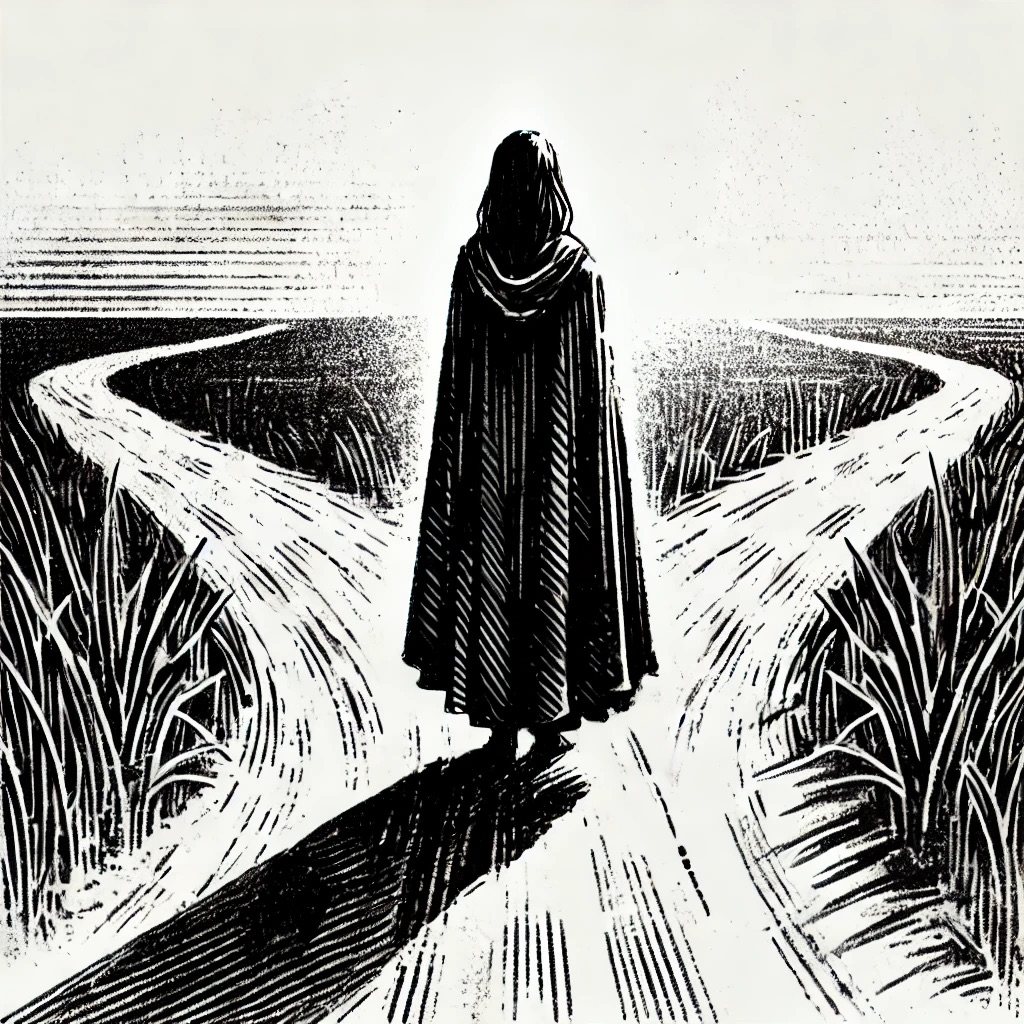
Unlearning, Rebuilding, Becoming

Ever since I started learning alchemy, I caught myself thinking that life would somehow become easier—more perfect. But I’ve found that isn’t true.

Over the past two years, my emotional growth has accelerated, largely due to my “shadow work”. I use quotes because “shadow work” can sound a bit woo woo, but in reality, it’s just what we all do: we grow, we learn, we live. Shadow work simply means being self-aware enough to face the parts of ourselves that have been neglected or ignored—the parts in pain. And while we call it work, it’s really just love. The hardest part isn’t the process itself; it’s having the courage to truly see those parts of ourselves.

Since diving into this work, my relationship with my family has improved. Why? Well, I have a complicated relationship with them—like many millennials do. Add to that the layers of being an immigrant, a woman, and growing up in a Catholic household, and you have a tangled web of expectations, traditions, and unspoken rules.

For most of my life, I sacrificed my own needs, betraying myself to make my family—especially my parents—happy. I spent years doing things for them, without even acknowledging my own feelings.

One example? Church.

I went to church with my parents every Sunday. While there’s nothing inherently wrong with that, what was wrong was suppressing how I truly felt about it.

Every week, I had to wake up at 7 AM so we could drive an hour to make it to the first mass. My parents liked the early service because it left the rest of the day free. I did enjoy aspects of those Sundays, but I wish I’d had a choice.

Technically, my mom said we had one. But was it really a choice?

  • Go to church, or hurt your mom.
  • Go to church, or disappoint your parents.
  • Go to church, or burn in hell.

I’m not sure any of those were real choices.

I would get up, sacrifice much-needed sleep, and sit in a pew, praying with my family. I did appreciate the time with them. But I didn’t appreciate the pressure to dress perfectly.

My church was full of judgmental people. There was an unspoken competitiveness: Who’s driving what car? Who gained weight? Who’s engaged? Who’s still single? Every week, I felt the pressure to dress well—to look polished. That meant modest dresses, pantyhose, curled hair, and uncomfortable shoes.

So not only was I waking up early, but I was also dressing as if I were going to prom, walking into a room where I felt like I was being quietly sized up. I’d stand for over an hour, reciting the same songs and prayers, playing the role of the good little girl—while resentment quietly built up inside me.

Church didn’t make me feel closer to God. If anything, it made me feel like I was constantly being watched, evaluated, and judged.

Then there was confession. Every month, I’d kneel in front of a priest and list my so-called sins—things like getting mad at my sister or saying the B-word with my friends. And yet, I’d feel immense guilt, as if I were begging God to spare me from eternal damnation.

Confession was like therapy—except instead of sitting with someone trained to help me process emotions, I was kneeling before a priest who was supposed to be a direct ear to God. Some priests asked leading questions, probably as a way to get kids to open up. Others just listened and asked if I regretted what I’d done—if I promised never to do it again.

Of course, I always promised.

But the next time I got mad at my sister, I’d feel awful. I thought I was a terrible person for failing to keep my word.

Now, as an adult, living with my boyfriend, I’m technically not allowed to go to confession. I’m “living in sin” according to my church, and I can’t confess until I either break up with him or get married.

Ironically, that’s the perfect excuse to stop going altogether.

Right before the pandemic, my mom pressured me to go to confession before Christmas, convinced it would be the worst thing ever if I didn’t. I couldn’t stand it anymore.

So, I lied.

I told her I’d go to the church near my apartment. But I didn’t.

And in that moment, I realized I didn’t need confession anymore. I had only ever done it to make my mom happy. And that’s not how spiritual practices should work. You have to connect with them on your own terms.

Since then, I haven’t been to confession, and honestly? I’m happier than ever.

My relationship with my family has improved. Spending time with them feels easier. I no longer feel like I’m enduring it—I actually look forward to seeing them.

This journey of shedding old patterns hasn’t been easy. Growth is messy. It’s uncomfortable. It’s ongoing.

I used to think that healing meant getting everything right. That alchemy would somehow make my life fall into place.

But the truth is, real growth isn’t about perfection—it’s about embracing all of yourself, including the parts that are still healing.

By stepping away from traditions and expectations that no longer serve me, I’ve found peace. Not the kind of peace that comes from pretending everything is fine, but the kind that comes from radical self-acceptance.

I’m still learning to prioritize my needs, to set boundaries, to stand in my own power.

But with every step, I am reconnecting with who I really am.

And that’s the most freeing thing I’ve ever experienced.

The Lesson of the Elephant: How I Learned to See Beyond My Beliefs

Six blindfolded men were brought to an elephant and asked to touch different parts of it. One man touched the leg. Another touched the tail. Another the ear, and so on. Each man was then asked to describe what they thought they were touching.

One said, “This is thin, long, and scaly like a snake. I must be touching a snake.”
Another said, “This is thick and sturdy like a tree trunk. I feel the bark. I must be touching a tree trunk.”
Yet another said, “This is flat, thin, and flexible like a leaf. I must be touching a large leaf.”

Each man was right in describing his experience, yet at the same time, each was wrong. None could see the bigger picture—they were all touching different parts of the same elephant.

This ancient story from Buddhist texts is often used to explain religion: how different perspectives lead to different interpretations, all of which can be both true and incomplete at the same time. But this isn’t just about religion. This is about life itself.

We all go through life with blindfolds of our own—our perspectives shaped by our upbringing, culture, and personal experiences. We believe what we’ve been taught, what we’ve seen, and what we’ve lived. But our understanding is always limited until we step outside our own perspective, listen to others, and see the world through different eyes.

When My Blindfold Was Removed

Growing up, my family was deeply religious, especially after immigrating to the U.S. By high school, I went to church every Sunday and prayed twice a day. At the time, the church did not accept gay people. Honestly, I don’t even know if I can say it’s fully accepting now, but I do know that many more people understand.

Back then, I had never met someone who was openly gay. I hadn’t even encountered someone I thought was gay. Sexuality wasn’t something I truly understood—not even my own. So, I held the beliefs I had been taught, the ones my church instilled in me. I believed that being gay was a choice. That’s not what I believe now.

When I started college, I moved into my dorm and met a gay man who lived across the hall. We became instant friends. It felt like a soul reunion, as if I had known him in another life.

The more I got to know him, the more I saw his light shine through. And the more I realized that what my church had told me about gay people simply wasn’t true. Whatever people think the Bible says about gay people—I believe it has been misinterpreted. But all I can say for certain is this:

Gay people are not condemned to hell.
Gayness is not a sin.
And I know that as a fact.

My perspective changed because I experienced the truth firsthand. Before, everything I thought I knew was theoretical. But once I had real, human connection—once I saw—I understood.

A Lesson in Courage

Not only did I come to respect gay people, but I began to admire them.

I saw in them a level of strength, courage, and wisdom that I hadn’t yet found in myself. They lived their truth—even when the world threatened them with rejection, jail, and eternal damnation. They stood firm and said, “This is who I am. If you don’t accept me, that’s your loss.”

Meanwhile, I wasn’t even sure if I could be myself authentically.

That realization changed me. It made me question everything I thought I knew. It made me see the limits of my own perspective.

Like the blindfolded men touching the elephant, I had only been seeing one small part of reality. Meeting my friend was like removing the blindfold.

And that’s the beauty of life—when we listen, when we learn, when we allow ourselves to grow, we begin to see the bigger picture.