The Shift from Proving to Listening

I’ve been thinking a lot about how organized religion and science have something in common.

Both often insist there’s only one right way to the truth.
Only one path worth following.
Both can refuse to acknowledge that life—and the universe—is so much bigger than them.

Lately, I’ve been working with the energy of fire.
What it means to embody it.
And the more I sit with that, the more I realize how much fire has shaped me—both the wild, untamed flames of my younger years and the steadier light I’m learning to hold now.

I’ve been reading Becoming Supernatural by Dr. Joe Dispenza. It’s fascinating—he talks about how our thoughts create our reality, how energy shapes matter, and how we can literally heal ourselves through intention and focus.
And while a lot of it resonates with me, I kept catching myself thinking…
People have known this.
We’ve understood these things for thousands of years.
It’s not exactly new.
But I still felt that old flicker of irritation.
That spark of anger when scientists present these ideas like they’ve just discovered them—as if no one really knew until science came along to explain it.
As if science is the only way to make something real.

And there it was again—my fire.
That same intensity I’ve carried for years.
The need to stand for something, to defend what I know, to burn through what feels wrong.
But I sat with it.
Why does this still bother me? Why does it ignite something in me?

And then it hit me.
It’s the same kind of closed-mindedness I used to feel in church.
That attitude, whether it comes from religion or science, where people believe they’ve found the truth—and everyone else is lost.
They think they have the answers.
They act superior.
And really, it’s just one perspective.
One path.
What gets to me isn’t that they have their way—it’s the belief that theirs is the best, or the only, way.

When I was in middle school, I had a friend named Angie.
We used to hang out after school, and one day we ended up talking about religion. She was a Seventh-day Adventist—or something close to it. I don’t fully remember. But I do remember how I acted.
I told her about my beliefs. About Jesus. And I was so sure of myself.
Like my religion was the only true path.
Like I was somehow more righteous, more “saved.”
Looking back, I can feel the heat of my own certainty.
The fire in me that wanted to be right.
I thought I had the truth, and I wanted to light the world on fire with it.

And then there was that summer when I was ten, visiting my dad’s parents in Ukraine.
They had converted to a different branch of Christianity.
As a Catholic kid, anything outside of the Roman Catholic Church felt strange to me.
And honestly, back then, I was worried it was something extreme—maybe something like Jehovah’s Witnesses.
I realize now it wasn’t, but at the time, all I could feel was the discomfort of something unfamiliar.
Something that challenged my view of the world.

One afternoon, while we were talking about Jesus, my grandma said, “Jesus wasn’t Catholic. That came later.”
And I, with all my fiery pride, said, “Well, Catholicism follows his true teachings.”
I thought I was making a point.
Later, I told my Babcia about the conversation, feeling proud of myself, like I’d won something.
But now? I feel a little ashamed.
Ashamed that I was so quick to shut the door.
That I let my fire burn too hot, without making space to listen.
I wish I had asked my grandma more about her faith.
I wish I had been curious about her experience.
Instead, I wanted to prove something.

Those moments taught me about fire.
How powerful it is.
How it can bring warmth and light—or destroy and divide.

Back then, my fire was all about proving I was right.
Defending my beliefs.
Burning through doubt with certainty.
But now I’m learning a different kind of fire.
The kind that stays steady.
That offers light without scorching.
That makes space for others to gather around.

So why am I judging now?
Why am I getting frustrated with scientists for doing exactly what I used to do—believing their way is the way?

Maybe this is another lesson in how to tend my fire.
Not to snuff it out—but to let it glow, steady and open.
To stay curious.
To remember that there’s more than one path.
More than one truth.
And that my fire doesn’t have to prove anything to anyone.
It just has to burn true.
Unlearning, Rebuilding, Becoming

Ever since I started learning alchemy, I caught myself thinking that life would somehow become easier—more perfect. But I’ve found that isn’t true.

Over the past two years, my emotional growth has accelerated, largely due to my “shadow work”. I use quotes because “shadow work” can sound a bit woo woo, but in reality, it’s just what we all do: we grow, we learn, we live. Shadow work simply means being self-aware enough to face the parts of ourselves that have been neglected or ignored—the parts in pain. And while we call it work, it’s really just love. The hardest part isn’t the process itself; it’s having the courage to truly see those parts of ourselves.

Since diving into this work, my relationship with my family has improved. Why? Well, I have a complicated relationship with them—like many millennials do. Add to that the layers of being an immigrant, a woman, and growing up in a Catholic household, and you have a tangled web of expectations, traditions, and unspoken rules.

For most of my life, I sacrificed my own needs, betraying myself to make my family—especially my parents—happy. I spent years doing things for them, without even acknowledging my own feelings.

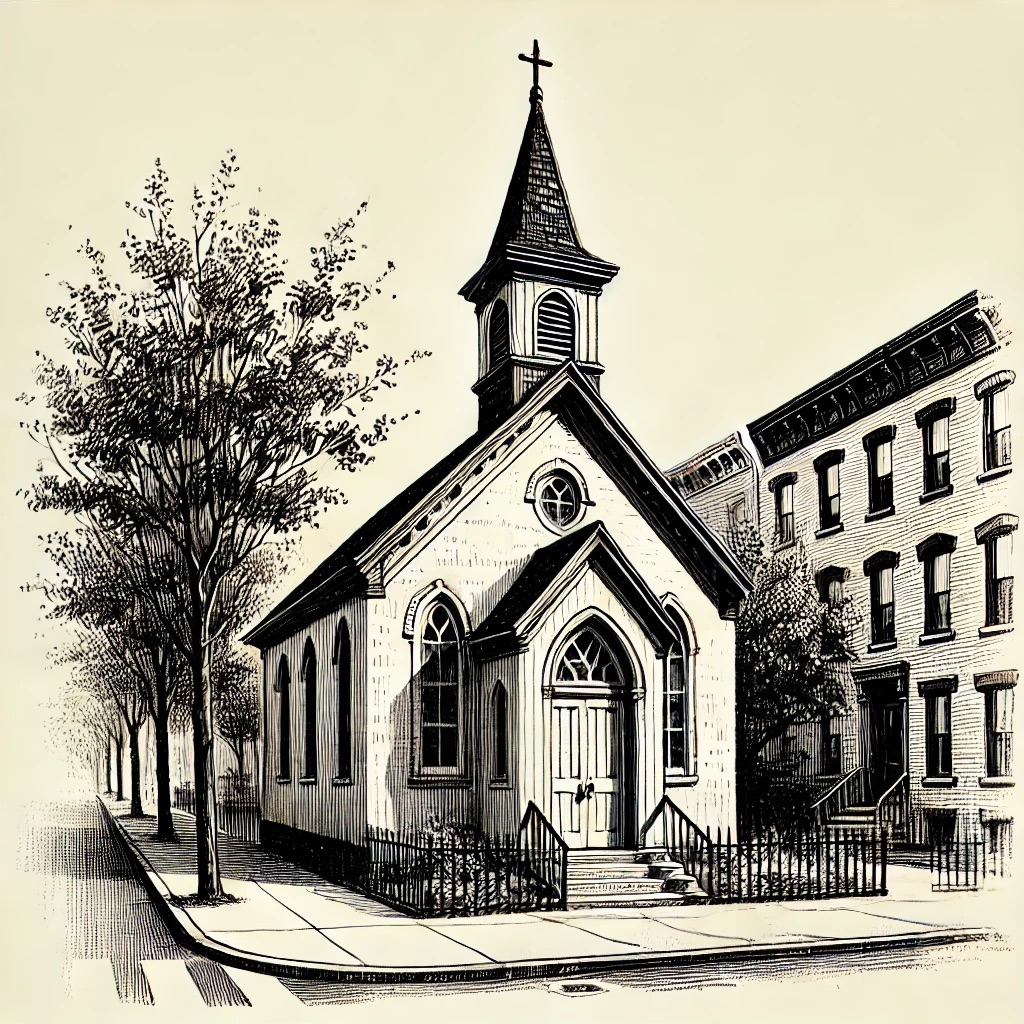
One example? Church.

I went to church with my parents every Sunday. While there’s nothing inherently wrong with that, what was wrong was suppressing how I truly felt about it.

Every week, I had to wake up at 7 AM so we could drive an hour to make it to the first mass. My parents liked the early service because it left the rest of the day free. I did enjoy aspects of those Sundays, but I wish I’d had a choice.

Technically, my mom said we had one. But was it really a choice?

  • Go to church, or hurt your mom.
  • Go to church, or disappoint your parents.
  • Go to church, or burn in hell.

I’m not sure any of those were real choices.

I would get up, sacrifice much-needed sleep, and sit in a pew, praying with my family. I did appreciate the time with them. But I didn’t appreciate the pressure to dress perfectly.

My church was full of judgmental people. There was an unspoken competitiveness: Who’s driving what car? Who gained weight? Who’s engaged? Who’s still single? Every week, I felt the pressure to dress well—to look polished. That meant modest dresses, pantyhose, curled hair, and uncomfortable shoes.

So not only was I waking up early, but I was also dressing as if I were going to prom, walking into a room where I felt like I was being quietly sized up. I’d stand for over an hour, reciting the same songs and prayers, playing the role of the good little girl—while resentment quietly built up inside me.

Church didn’t make me feel closer to God. If anything, it made me feel like I was constantly being watched, evaluated, and judged.

Then there was confession. Every month, I’d kneel in front of a priest and list my so-called sins—things like getting mad at my sister or saying the B-word with my friends. And yet, I’d feel immense guilt, as if I were begging God to spare me from eternal damnation.

Confession was like therapy—except instead of sitting with someone trained to help me process emotions, I was kneeling before a priest who was supposed to be a direct ear to God. Some priests asked leading questions, probably as a way to get kids to open up. Others just listened and asked if I regretted what I’d done—if I promised never to do it again.

Of course, I always promised.

But the next time I got mad at my sister, I’d feel awful. I thought I was a terrible person for failing to keep my word.

Now, as an adult, living with my boyfriend, I’m technically not allowed to go to confession. I’m “living in sin” according to my church, and I can’t confess until I either break up with him or get married.

Ironically, that’s the perfect excuse to stop going altogether.

Right before the pandemic, my mom pressured me to go to confession before Christmas, convinced it would be the worst thing ever if I didn’t. I couldn’t stand it anymore.

So, I lied.

I told her I’d go to the church near my apartment. But I didn’t.

And in that moment, I realized I didn’t need confession anymore. I had only ever done it to make my mom happy. And that’s not how spiritual practices should work. You have to connect with them on your own terms.

Since then, I haven’t been to confession, and honestly? I’m happier than ever.

My relationship with my family has improved. Spending time with them feels easier. I no longer feel like I’m enduring it—I actually look forward to seeing them.

This journey of shedding old patterns hasn’t been easy. Growth is messy. It’s uncomfortable. It’s ongoing.

I used to think that healing meant getting everything right. That alchemy would somehow make my life fall into place.

But the truth is, real growth isn’t about perfection—it’s about embracing all of yourself, including the parts that are still healing.

By stepping away from traditions and expectations that no longer serve me, I’ve found peace. Not the kind of peace that comes from pretending everything is fine, but the kind that comes from radical self-acceptance.

I’m still learning to prioritize my needs, to set boundaries, to stand in my own power.

But with every step, I am reconnecting with who I really am.

And that’s the most freeing thing I’ve ever experienced.