My April Integration Story: When Growth Feels Like Falling Apart

I started April already feeling drained — emotionally raw, heavy, and confused. It was like my heart was still catching up to all the changes I had been making. I knew this month was supposed to be about integration — that’s what the energy reading at the beginning of the month said. April was meant to help me bring all my parts back together, to move from fragmentation into wholeness. I thought that would feel peaceful, empowering. I thought I’d be soaring by now.

Instead, it felt like I was falling apart.

At the start of the month, I had big intentions. I wanted to use April to work out more, feel strong in my body, lose some weight before my trip at the end of the month. I was ready to take action. But right around my birthday, I got hit with food poisoning out of nowhere. I had no choice but to slow down and surrender. It was a moment that made me realize just how much I do for others — how often I put myself last. And for the first time in a long time, I wished for something simple: peace.

The whole month, I found myself asking: Why is this so hard?
Choosing myself — choosing rest, choosing gentleness — felt heavier than I ever imagined. I thought freedom would feel light, happy, expansive. Instead, it felt like grief. Like standing in the ruins of old versions of myself.

And when the rubble cleared, the parts of me that stepped forward shocked me.

I didn’t meet the free-spirited, peaceful version of myself I expected. I didn’t meet the “healed” shaman-self I thought would be waiting for me on the other side.
I met the critic.
I met the voice that tells me I’m lazy.
I met the part that demands I suck in my stomach at the beach, that whispers I’m not enough no matter how much I do.
I met the old judge — and instead of fighting her, I listened.

Integration, I learned, isn’t about becoming the perfect version of myself.
It’s about making room for all the parts of me I tried to exile.

It’s about seeing my anger, my exhaustion, my inner critic — and letting them have a seat at the table, without letting them run the show.

April was hard because true integration is not about transcendence. It’s about embodiment.
It’s about bringing the rejected parts back into the heart of who I am.

Not to glorify them.
Not to obey them.
But to love them back into wholeness.

As this month closes, I realize:
I’m not falling apart.
I’m not falling apart and
I’m not soaring away.
I’m falling deeper into myself — into the parts that used to scare me.
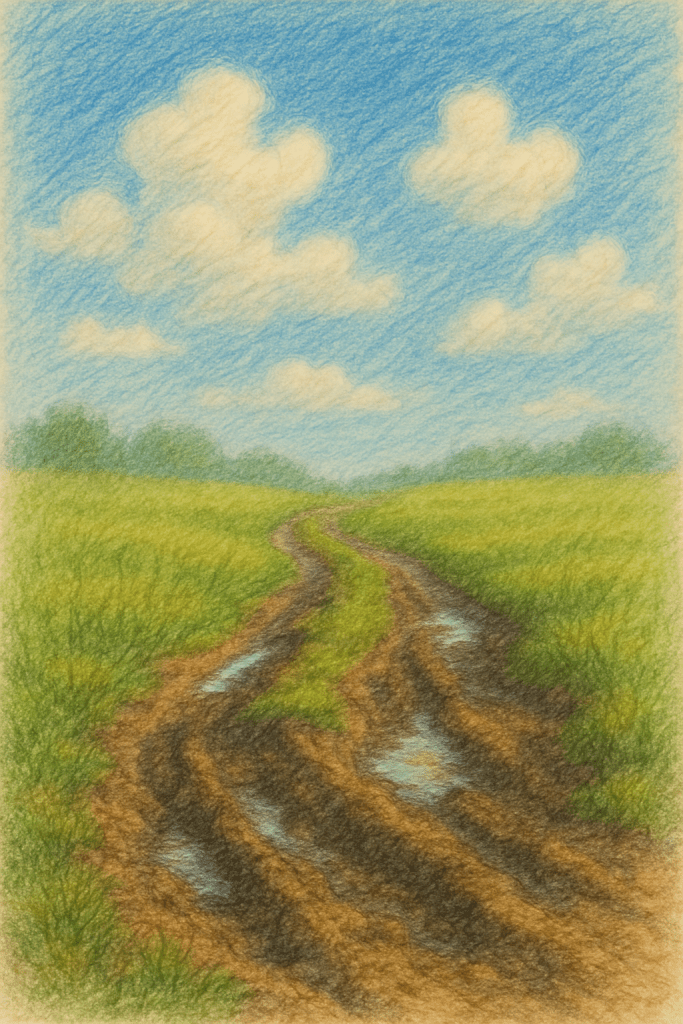
Even though the ground feels muddy, I’m not afraid to keep walking.
Something in me has changed.
I don’t have all the answers, but I trust myself enough to stay.
I’m grateful I sat with myself through it all.
And that makes me stronger than I’ve ever been.

Unlearning, Rebuilding, Becoming

Ever since I started learning alchemy, I caught myself thinking that life would somehow become easier—more perfect. But I’ve found that isn’t true.

Over the past two years, my emotional growth has accelerated, largely due to my “shadow work”. I use quotes because “shadow work” can sound a bit woo woo, but in reality, it’s just what we all do: we grow, we learn, we live. Shadow work simply means being self-aware enough to face the parts of ourselves that have been neglected or ignored—the parts in pain. And while we call it work, it’s really just love. The hardest part isn’t the process itself; it’s having the courage to truly see those parts of ourselves.

Since diving into this work, my relationship with my family has improved. Why? Well, I have a complicated relationship with them—like many millennials do. Add to that the layers of being an immigrant, a woman, and growing up in a Catholic household, and you have a tangled web of expectations, traditions, and unspoken rules.

For most of my life, I sacrificed my own needs, betraying myself to make my family—especially my parents—happy. I spent years doing things for them, without even acknowledging my own feelings.

One example? Church.

I went to church with my parents every Sunday. While there’s nothing inherently wrong with that, what was wrong was suppressing how I truly felt about it.

Every week, I had to wake up at 7 AM so we could drive an hour to make it to the first mass. My parents liked the early service because it left the rest of the day free. I did enjoy aspects of those Sundays, but I wish I’d had a choice.

Technically, my mom said we had one. But was it really a choice?

  • Go to church, or hurt your mom.
  • Go to church, or disappoint your parents.
  • Go to church, or burn in hell.

I’m not sure any of those were real choices.

I would get up, sacrifice much-needed sleep, and sit in a pew, praying with my family. I did appreciate the time with them. But I didn’t appreciate the pressure to dress perfectly.

My church was full of judgmental people. There was an unspoken competitiveness: Who’s driving what car? Who gained weight? Who’s engaged? Who’s still single? Every week, I felt the pressure to dress well—to look polished. That meant modest dresses, pantyhose, curled hair, and uncomfortable shoes.

So not only was I waking up early, but I was also dressing as if I were going to prom, walking into a room where I felt like I was being quietly sized up. I’d stand for over an hour, reciting the same songs and prayers, playing the role of the good little girl—while resentment quietly built up inside me.

Church didn’t make me feel closer to God. If anything, it made me feel like I was constantly being watched, evaluated, and judged.

Then there was confession. Every month, I’d kneel in front of a priest and list my so-called sins—things like getting mad at my sister or saying the B-word with my friends. And yet, I’d feel immense guilt, as if I were begging God to spare me from eternal damnation.

Confession was like therapy—except instead of sitting with someone trained to help me process emotions, I was kneeling before a priest who was supposed to be a direct ear to God. Some priests asked leading questions, probably as a way to get kids to open up. Others just listened and asked if I regretted what I’d done—if I promised never to do it again.

Of course, I always promised.

But the next time I got mad at my sister, I’d feel awful. I thought I was a terrible person for failing to keep my word.

Now, as an adult, living with my boyfriend, I’m technically not allowed to go to confession. I’m “living in sin” according to my church, and I can’t confess until I either break up with him or get married.

Ironically, that’s the perfect excuse to stop going altogether.

Right before the pandemic, my mom pressured me to go to confession before Christmas, convinced it would be the worst thing ever if I didn’t. I couldn’t stand it anymore.

So, I lied.

I told her I’d go to the church near my apartment. But I didn’t.

And in that moment, I realized I didn’t need confession anymore. I had only ever done it to make my mom happy. And that’s not how spiritual practices should work. You have to connect with them on your own terms.

Since then, I haven’t been to confession, and honestly? I’m happier than ever.

My relationship with my family has improved. Spending time with them feels easier. I no longer feel like I’m enduring it—I actually look forward to seeing them.

This journey of shedding old patterns hasn’t been easy. Growth is messy. It’s uncomfortable. It’s ongoing.

I used to think that healing meant getting everything right. That alchemy would somehow make my life fall into place.

But the truth is, real growth isn’t about perfection—it’s about embracing all of yourself, including the parts that are still healing.

By stepping away from traditions and expectations that no longer serve me, I’ve found peace. Not the kind of peace that comes from pretending everything is fine, but the kind that comes from radical self-acceptance.

I’m still learning to prioritize my needs, to set boundaries, to stand in my own power.

But with every step, I am reconnecting with who I really am.

And that’s the most freeing thing I’ve ever experienced.