We Don’t Need to Hurt to Heal: A Feminine Reclamation of Wisdom

I’ve been thinking about all the times I’ve doubted my body because someone with a degree said something different.

All the times I was told that if it wasn’t backed by science, it wasn’t real.
That if it wasn’t studied in a lab, on rats, on men, on isolated variables, it didn’t count.
That my knowing wasn’t proof.

But I’m done accepting that framework.

Because the feminine path of healing doesn’t require violence.


I don’t need to see an animal suffer to know what nourishes me.

I don’t need test results to believe what my womb already told me.
I don’t need a randomized control trial to validate what my intuition whispered when I lay awake at night, wondering why my body was shutting down.
I don’t need mouse trials to honor menstrual cycles, emotions, or sacred bread.

Because the truth is: we are not machines. We are ecosystems.

And the way we heal is not through control and dissection, but through listening and remembering.


Science, as we know it, has been built on extraction.

  • Take from animals.
  • Take from women’s bodies.
  • Take from indigenous wisdom and call it research.
  • Package it. Patent it. Profit from it.

But feminine wisdom doesn’t extract. It relates.

It says:
What if we let the body speak?
What if we trust the earth’s timing?
What if we stop cutting open the mystery and instead sit with it?


I believe in a way of knowing that doesn’t require harm to be valid.

Call it soft science.
Call it sacred.
Call it memory.
Call it what it is: truth.

Because I’ve lived in a body that has broken from expert advice.
I’ve lived through diets that won applause but drained my vitality.
And I’ve felt the return of power when I stopped asking permission and started listening inward.


We don’t need to hurt to heal.

Not animals.
Not ourselves.
Not the land.
Not each other.

We need nourishment.
We need reverence.
We need to remember what we’ve always known.

And we need to stop treating wisdom like it must be proven in order to exist.

Some truths are older than studies.
Some truths are meant to be felt, not measured.

And I will no longer apologize for holding them.

My April Integration Story: When Growth Feels Like Falling Apart

I started April already feeling drained — emotionally raw, heavy, and confused. It was like my heart was still catching up to all the changes I had been making. I knew this month was supposed to be about integration — that’s what the energy reading at the beginning of the month said. April was meant to help me bring all my parts back together, to move from fragmentation into wholeness. I thought that would feel peaceful, empowering. I thought I’d be soaring by now.

Instead, it felt like I was falling apart.

At the start of the month, I had big intentions. I wanted to use April to work out more, feel strong in my body, lose some weight before my trip at the end of the month. I was ready to take action. But right around my birthday, I got hit with food poisoning out of nowhere. I had no choice but to slow down and surrender. It was a moment that made me realize just how much I do for others — how often I put myself last. And for the first time in a long time, I wished for something simple: peace.

The whole month, I found myself asking: Why is this so hard?
Choosing myself — choosing rest, choosing gentleness — felt heavier than I ever imagined. I thought freedom would feel light, happy, expansive. Instead, it felt like grief. Like standing in the ruins of old versions of myself.

And when the rubble cleared, the parts of me that stepped forward shocked me.

I didn’t meet the free-spirited, peaceful version of myself I expected. I didn’t meet the “healed” shaman-self I thought would be waiting for me on the other side.
I met the critic.
I met the voice that tells me I’m lazy.
I met the part that demands I suck in my stomach at the beach, that whispers I’m not enough no matter how much I do.
I met the old judge — and instead of fighting her, I listened.

Integration, I learned, isn’t about becoming the perfect version of myself.
It’s about making room for all the parts of me I tried to exile.

It’s about seeing my anger, my exhaustion, my inner critic — and letting them have a seat at the table, without letting them run the show.

April was hard because true integration is not about transcendence. It’s about embodiment.
It’s about bringing the rejected parts back into the heart of who I am.

Not to glorify them.
Not to obey them.
But to love them back into wholeness.

As this month closes, I realize:
I’m not falling apart.

I’m not falling apart and
I’m not soaring away.
I’m falling deeper into myself — into the parts that used to scare me.
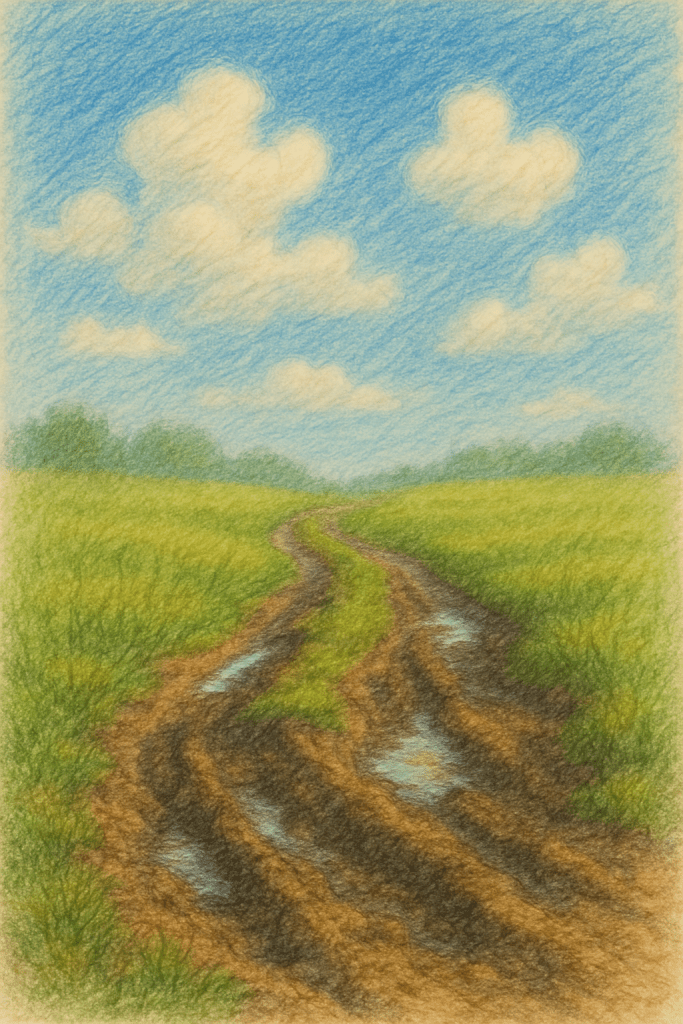
Even though the ground feels muddy, I’m not afraid to keep walking.
Something in me has changed.
I don’t have all the answers, but I trust myself enough to stay.
I’m grateful I sat with myself through it all.
And that makes me stronger than I’ve ever been.

Food as a Portal: Connecting to the Past Through Taste

It started with a bite.

Crispy, salty, tangy—the flavors hit my tongue, and suddenly, I wasn’t just sitting there eating a Filet-O-Fish. I was somewhere else. Somewhere familiar.

I was back in my hometown, inside the Walmart where my mom used to take me as a kid. There was a McDonald’s inside, and because it was Lent, we got the Filet-O-Fish. It was a rare treat. As immigrants, we didn’t eat out often, not even at fast food places like McDonald’s. But on that day, we sat together, unwrapping the warm sandwich, dipping fries into ketchup, and sharing a simple meal.

And years later, a single bite transported me back.

It wasn’t just nostalgia. It was something deeper. A tether between past and present, a connection I could feel in my body.

Nowadays, I don’t eat fast food often, and I almost never order a Filet-O-Fish. In spiritual spaces, fast food is often dismissed as “low vibrational,” something to avoid. And I get it. I grew up picking corn and beans straight from the fields—I know the taste of real, fresh food, the kind that nourishes not just the body but the spirit. I also understand the concerns about processed foods, artificial ingredients, and the impact of what we consume. A Big Mac and an apple from a tree are not the same.

But what bothers me is the judgment.

There’s this idea that spirituality and fast food don’t mix, that eating “low-energy” food somehow makes a person less enlightened. But is that really true? Would people think differently of the Dalai Lama if he ate a Baconator once a week? What if he drank a bottle of wine every night? Would that change how they viewed his wisdom?

I have no idea what the Dalai Lama eats, but I’d bet he doesn’t frequent McDonald’s. Still, does that mean his spiritual depth depends on his diet?

This kind of thinking is a trap—a trap of ego, of judgment, of false superiority. Because the truth is, spirituality isn’t about what you eat. It’s about awareness, connection, and presence. And that’s exactly what I felt as I sat there eating that sandwich.

With every bite, I was reliving that moment with my mom. I could feel the warmth of that memory, as if I were there again, as if time had folded in on itself. A surge of energy shot through me, something so profound that I still feel chills writing about it.

Food is more than just nourishment. It’s a bridge.

If a simple sandwich could connect me to my past self, then food can connect us to our ancestors, too.

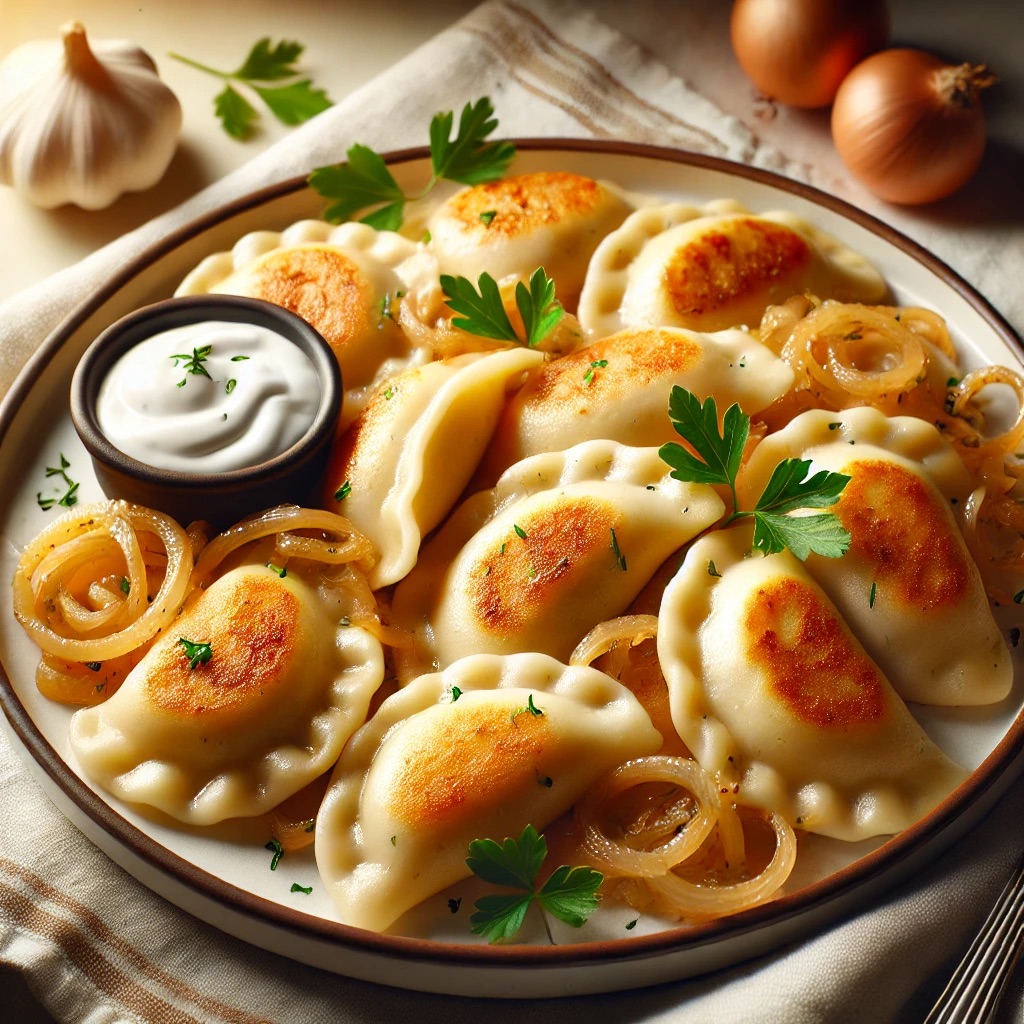
For me, eating pierogies brings me back to my grandmother. I can still see her in the kitchen, her hands moving quickly, shaping dough into small discs, filling them with potatoes and cheese. I remember the mountain of flour on the table, the rhythmic pressing of each pierogi shut. And when I eat them now, I feel her presence. I feel my ancestors, even the ones I never met.

Food carries memory. It carries energy. It carries love.

So maybe it’s not about whether food is “high vibration” or “low vibration.” Maybe the real question is: what does this food connect you to?