I didn’t bring candles or flowers. I didn’t have a circle or altar or sacred tools. All I had was my body and the presence of something holy moving through me.
It was Beltane, and I was standing in the Caribbean Sea.
The water was warm and alive. I stepped in reverently letting the waves touch me like a welcome. Then, I began to dance.
I bowed to the West and honored the water I was standing in. The realm of emotion, intuition, and mystery. I bowed to the North, calling in the earth and rooting into Pachamama, asking that the light pour down through me and anchor into her heart. I bowed to the East, asking for vision and clarity, to see through illusion. I bowed to the South, stoking the fire in my belly, the courage to live from truth.
I called in light from God, from Source, and let it flow through my crown into my field, then all the way down to my root, anchoring deep into the center of the Earth. I danced in the water, sang softly, and let myself hum and move however the energy wanted to move.
Then I prayed: “Bless this land. Bless this water. May healing ripple through these waves.”
I offered my body, my breath, and my song. And then something happened.
A small piece of styrofoam floated toward me, like a response. I didn’t ignore it. I picked it up gently, and I knew. This was part of the ritual.
This was not just pollution. It was message. The water had given me something to carry, to clear, to heal. And I accepted.
In that moment, I understood something:
Sometimes we don’t offer something to the water. Sometimes the water offers us a task, a role, a responsibility. And that is just as sacred.
Then I prayed something deeper:
“Let me see what is hidden. Let me not turn away. Let me see what my mind has been trained not to see.”
I remembered what Alberto Villoldo had said…that when colonists arrived, the native people didn’t see their ships at first because they couldn’t comprehend them. But I don’t want to live that way. I don’t want to protect myself from truth. I want to see the ships. Even if they’re terrifying. Even if they change everything.
So I kept dancing. Becoming part of the Earth’s prayer.
And in that space, under the Beltane sun, in the water, I remembered:
My body is my altar. My voice is my offering. And the Earth will speak…if I am willing to listen.
I’ve been thinking a lot about how organized religion and science have something in common.
Both often insist there’s only one right way to the truth. Only one path worth following. Both can refuse to acknowledge that life—and the universe—is so much bigger than them.
Lately, I’ve been working with the energy of fire. What it means to embody it. And the more I sit with that, the more I realize how much fire has shaped me—both the wild, untamed flames of my younger years and the steadier light I’m learning to hold now.
I’ve been reading Becoming Supernatural by Dr. Joe Dispenza. It’s fascinating—he talks about how our thoughts create our reality, how energy shapes matter, and how we can literally heal ourselves through intention and focus. And while a lot of it resonates with me, I kept catching myself thinking… People have known this. We’ve understood these things for thousands of years. It’s not exactly new. But I still felt that old flicker of irritation. That spark of anger when scientists present these ideas like they’ve just discovered them—as if no one really knew until science came along to explain it. As if science is the only way to make something real.
And there it was again—my fire. That same intensity I’ve carried for years. The need to stand for something, to defend what I know, to burn through what feels wrong. But I sat with it. Why does this still bother me? Why does it ignite something in me?
And then it hit me. It’s the same kind of closed-mindedness I used to feel in church. That attitude, whether it comes from religion or science, where people believe they’ve found the truth—and everyone else is lost. They think they have the answers. They act superior. And really, it’s just one perspective. One path. What gets to me isn’t that they have their way—it’s the belief that theirs is the best, or the only, way.
When I was in middle school, I had a friend named Angie. We used to hang out after school, and one day we ended up talking about religion. She was a Seventh-day Adventist—or something close to it. I don’t fully remember. But I do remember how I acted. I told her about my beliefs. About Jesus. And I was so sure of myself. Like my religion was the only true path. Like I was somehow more righteous, more “saved.” Looking back, I can feel the heat of my own certainty. The fire in me that wanted to be right. I thought I had the truth, and I wanted to light the world on fire with it.
And then there was that summer when I was ten, visiting my dad’s parents in Ukraine. They had converted to a different branch of Christianity. As a Catholic kid, anything outside of the Roman Catholic Church felt strange to me. And honestly, back then, I was worried it was something extreme—maybe something like Jehovah’s Witnesses. I realize now it wasn’t, but at the time, all I could feel was the discomfort of something unfamiliar. Something that challenged my view of the world.
One afternoon, while we were talking about Jesus, my grandma said, “Jesus wasn’t Catholic. That came later.” And I, with all my fiery pride, said, “Well, Catholicism follows his true teachings.” I thought I was making a point. Later, I told my Babcia about the conversation, feeling proud of myself, like I’d won something. But now? I feel a little ashamed. Ashamed that I was so quick to shut the door. That I let my fire burn too hot, without making space to listen. I wish I had asked my grandma more about her faith. I wish I had been curious about her experience. Instead, I wanted to prove something.
Those moments taught me about fire. How powerful it is. How it can bring warmth and light—or destroy and divide.
Back then, my fire was all about proving I was right. Defending my beliefs. Burning through doubt with certainty. But now I’m learning a different kind of fire. The kind that stays steady. That offers light without scorching. That makes space for others to gather around.
So why am I judging now? Why am I getting frustrated with scientists for doing exactly what I used to do—believing their way is the way?
Maybe this is another lesson in how to tend my fire. Not to snuff it out—but to let it glow, steady and open. To stay curious. To remember that there’s more than one path. More than one truth. And that my fire doesn’t have to prove anything to anyone. It just has to burn true.
There are moments on our spiritual journey that arrive quietly, without fanfare, and yet they reshape us from the inside out. Recently, I found myself in one of those moments—and it changed everything.
For weeks, I had been working with the energy of March, calling it a time of creative fire, purpose, and vision. But if I’m honest, I didn’t fully understand what those words meant when I first wrote them down. They sounded nice. Inspiring. Maybe even a little generic.
Now I see. Now I feel the fire. It’s the Inner Flame. And it’s been burning inside me all along.
February: A Sacred Song
February was about music. I followed the call to sing when I cooked, to sing into my water before drinking, to attend a choir show, to stand in front of an ancient image at the MET that stirred something deep in me. Music became a way to open my heart, to tune my energy, and to connect with something greater.
Looking back, I realize February’s song was preparing me. It was tuning my instrument, setting the frequency for the next phase. That phase is March, and its invitation is clear: Tend the Inner Flame.
March: Embodying the Inner Flame
I expected March to be intense—wild action, big moves, fiery transformations. Instead, the fire came in an unexpected way. It arrived as steady presence, embodiment, and ritual. I found myself moving my body through regular workouts. Stress softened. Life felt calmer. I wasn’t running from anything or chasing anything. For the first time in a while, I felt okay. Like the stillness after a storm. Like I was finally tending my own flame, rather than looking for a spark outside of myself.
I lit candles for myself, for my ancestors, for others. I journaled. I meditated. I was present with simple daily tasks. This was the fire—not destructive, but sustaining. Not raging, but steady. A hearth fire, one that keeps the home warm and the heart open.
The Sacred Fire of March
Now I understand what March was always about.
February opened my heart through music and vibration.
March is preparing my body and life to embody the Inner Flame, to live it, not just imagine it.
This is the fire that sustains, that nourishes, that empowers. It’s not a wild blaze. It’s the steady flame I tend every day—with movement, presence, and purpose.
A Poem for the Inner Flame
I am the one who finds you in loss and leads you to victory. I am your inner fire, your courage, your forward movement. I walk with those who dare to rise after they have fallen. I am your vision lifted high, your wings spread wide. As you walk forward, I ride beside you. I am the flame that shows you how to rule your life as a king.
Final Reflection
If you’re feeling stuck, or if you’ve been waiting for the next spark, know this: You are already the Inner Flame. The work isn’t to find the fire—it’s to tend it. Tend it in your body. Tend it in your life. Tend it in your rituals.
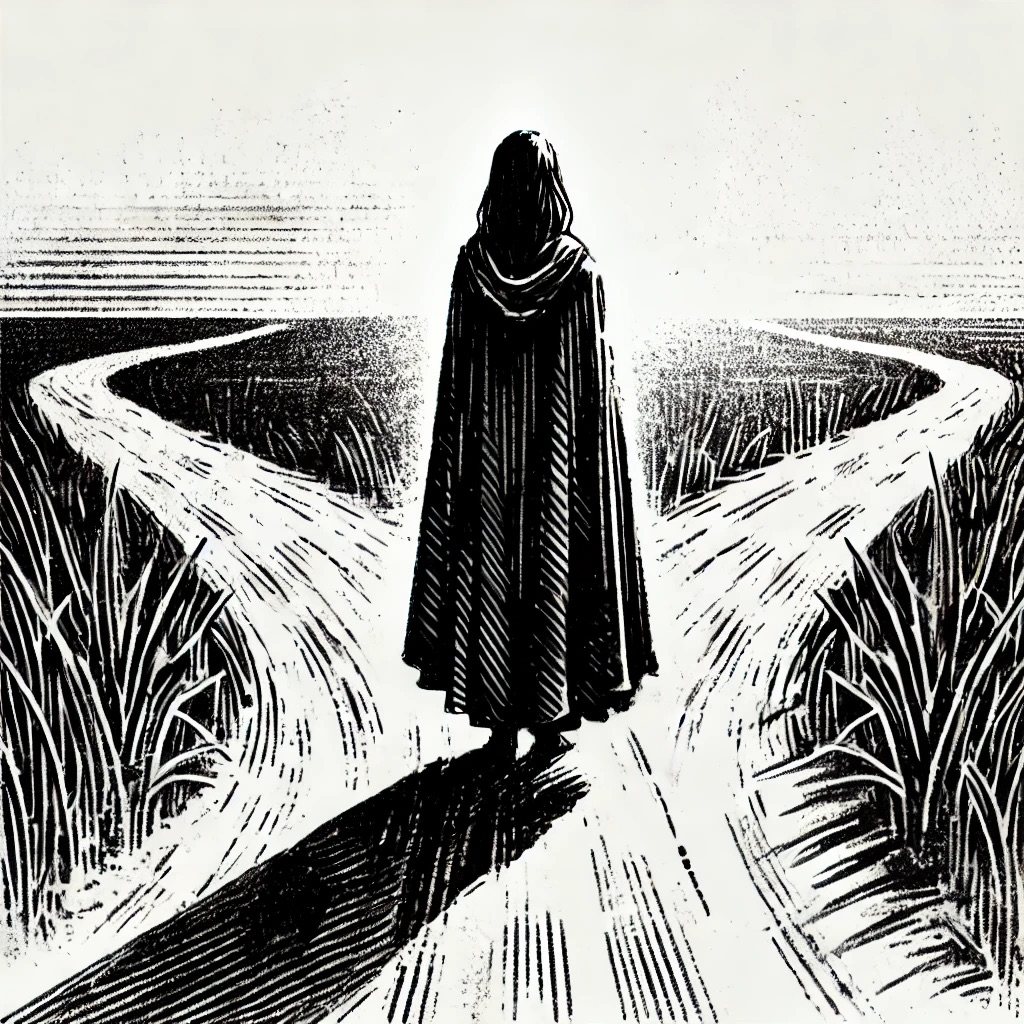
I’ve always prided myself on being someone who can let go.
People. Places. Things that once made me happy.
I’ve walked away from things before—without looking back. Not because I wanted something new, but because I learned early on how to let go. I took pride in being strong enough to move on.
But lately, I’ve been clinging to something. And I don’t understand why.
It reminds me of something that happened in high school. I quit the volleyball team after junior year. My best friend was furious. We’d started on the team together as freshmen, but her experience was different from mine. She was fast, athletic. Me? I was a little slow. I had good hands, but my body just didn’t move fast enough. I didn’t get a lot of play time. And when I did, I was a ball of nerves. I got anxious about serving the ball. The simple stuff.
Then we got a new coach our junior year. He did things differently—he broke the game down into drills, played us videos, explained strategy. He even gave us a test. And I aced it. He told me I understood volleyball better than anyone else on the team. But I still couldn’t get my body there. I agreed with him. And looking back now, I wish someone had explained that it was simply a matter of training. That I could have worked at it. Conditioned. Strengthened. But at the time, I was working after school at a pizza shop. My family was going through some things. I didn’t have the energy to sit on the bench every game, watching my teammates play and feeling like shit because I wasn’t better. So I quit. And sure, it was sad to lose the team, the bus rides, the friends. But I had grown-up shit to deal with. And I made peace with it.
Now here I am, years later, dealing with grown-up shit again.
And I find myself clinging to this job. I’ve come full circle with it—hated it, loved it, hated it again, and somehow, I’ve landed in a place where I kind of love it again. But I know it’s time to go. I feel it. And yet, something in me hangs on, claws in deep. I don’t know why. And honestly, I’m tired. Tired of the push and pull. Tired of circling the decision. Tired of holding on when I know I need to let go.
I’ve been sitting with this for a while. Trying to figure it out. And then last week, I pulled the Magician card in a reading. The Magician pointed to the ground. The message was clear—it’s time to bring what I know down to earth. To live it. To embody it.
So I did. I meditated. I journaled. I went for walks. I cleaned the house and tried to appreciate the mundane stuff. I thought a lot about what it means to embody something, instead of just knowing it. Because I know it’s time to leave this job. But I haven’t embodied that truth yet. And I realized—it’s the same lesson I learned back on the volleyball court. Knowing something isn’t the same as doing it. Understanding the game isn’t the same as playing it. Wanting change isn’t the same as living it.
Embodying is about grounding. It’s about getting out of my head and into my body. And the thing that would have helped me then—the thing that would have gotten me closer to who I wanted to be—was movement. Training. Showing up for myself, physically. And I think that’s what will help me now.
I need to move. Not just walk circles in my mind, but move my body. Work out. Sweat. Breathe. Feel grounded in something real, something present. Letting go isn’t just a mental decision—it’s something I have to do, fully, with my body and my actions. And maybe writing this is part of that action. Maybe this is me naming it. Maybe this is me taking the first step.
Just because I’ve carried something for a long time doesn’t mean I have to carry it forever. Just because I’ve built something here doesn’t mean I have to live inside of it. It’s okay to walk away—even if I love it. It’s okay to leave—even if I’m good at it. It’s okay to outgrow a place that once fit me perfectly.
I’m ready for something new. I’m ready to let go. And this time, I’ll let my body lead the way.
Ever since I started learning alchemy, I caught myself thinking that life would somehow become easier—more perfect. But I’ve found that isn’t true.
Over the past two years, my emotional growth has accelerated, largely due to my “shadow work”. I use quotes because “shadow work” can sound a bit woo woo, but in reality, it’s just what we all do: we grow, we learn, we live. Shadow work simply means being self-aware enough to face the parts of ourselves that have been neglected or ignored—the parts in pain. And while we call it work, it’s really just love. The hardest part isn’t the process itself; it’s having the courage to truly see those parts of ourselves.
Since diving into this work, my relationship with my family has improved. Why? Well, I have a complicated relationship with them—like many millennials do. Add to that the layers of being an immigrant, a woman, and growing up in a Catholic household, and you have a tangled web of expectations, traditions, and unspoken rules.
For most of my life, I sacrificed my own needs, betraying myself to make my family—especially my parents—happy. I spent years doing things for them, without even acknowledging my own feelings.
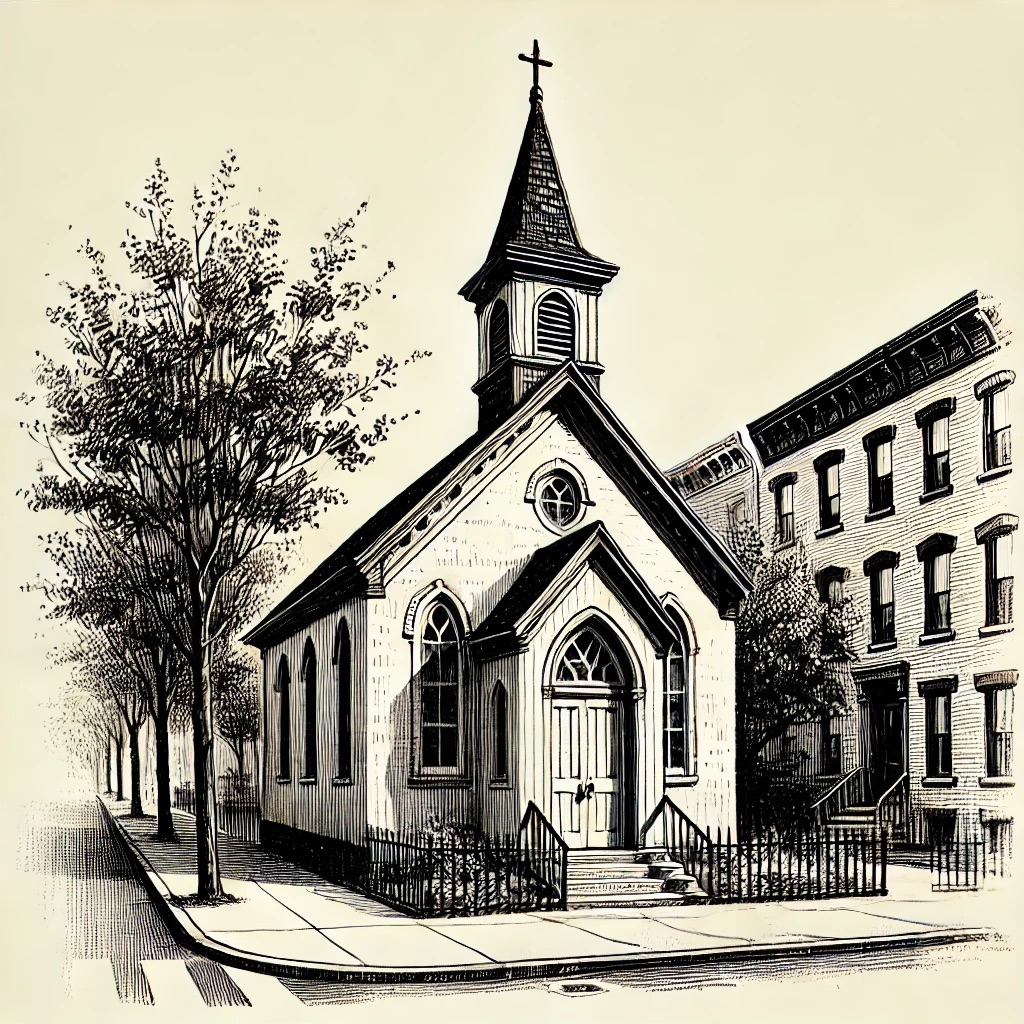
One example? Church.
I went to church with my parents every Sunday. While there’s nothing inherently wrong with that, what was wrong was suppressing how I truly felt about it.
Every week, I had to wake up at 7 AM so we could drive an hour to make it to the first mass. My parents liked the early service because it left the rest of the day free. I did enjoy aspects of those Sundays, but I wish I’d had a choice.
Technically, my mom said we had one. But was it really a choice?
Go to church, or hurt your mom.
Go to church, or disappoint your parents.
Go to church, or burn in hell.
I’m not sure any of those were real choices.
I would get up, sacrifice much-needed sleep, and sit in a pew, praying with my family. I did appreciate the time with them. But I didn’t appreciate the pressure to dress perfectly.
My church was full of judgmental people. There was an unspoken competitiveness: Who’s driving what car? Who gained weight? Who’s engaged? Who’s still single? Every week, I felt the pressure to dress well—to look polished. That meant modest dresses, pantyhose, curled hair, and uncomfortable shoes.
So not only was I waking up early, but I was also dressing as if I were going to prom, walking into a room where I felt like I was being quietly sized up. I’d stand for over an hour, reciting the same songs and prayers, playing the role of the good little girl—while resentment quietly built up inside me.
Church didn’t make me feel closer to God. If anything, it made me feel like I was constantly being watched, evaluated, and judged.
Then there was confession. Every month, I’d kneel in front of a priest and list my so-called sins—things like getting mad at my sister or saying the B-word with my friends. And yet, I’d feel immense guilt, as if I were begging God to spare me from eternal damnation.
Confession was like therapy—except instead of sitting with someone trained to help me process emotions, I was kneeling before a priest who was supposed to be a direct ear to God. Some priests asked leading questions, probably as a way to get kids to open up. Others just listened and asked if I regretted what I’d done—if I promised never to do it again.
Of course, I always promised.
But the next time I got mad at my sister, I’d feel awful. I thought I was a terrible person for failing to keep my word.
Now, as an adult, living with my boyfriend, I’m technically not allowed to go to confession. I’m “living in sin” according to my church, and I can’t confess until I either break up with him or get married.
Ironically, that’s the perfect excuse to stop going altogether.
Right before the pandemic, my mom pressured me to go to confession before Christmas, convinced it would be the worst thing ever if I didn’t. I couldn’t stand it anymore.
So, I lied.
I told her I’d go to the church near my apartment. But I didn’t.
And in that moment, I realized I didn’t need confession anymore. I had only ever done it to make my mom happy. And that’s not how spiritual practices should work. You have to connect with them on your own terms.
Since then, I haven’t been to confession, and honestly? I’m happier than ever.
My relationship with my family has improved. Spending time with them feels easier. I no longer feel like I’m enduring it—I actually look forward to seeing them.
This journey of shedding old patterns hasn’t been easy. Growth is messy. It’s uncomfortable. It’s ongoing.
I used to think that healing meant getting everything right. That alchemy would somehow make my life fall into place.
But the truth is, real growth isn’t about perfection—it’s about embracing all of yourself, including the parts that are still healing.
By stepping away from traditions and expectations that no longer serve me, I’ve found peace. Not the kind of peace that comes from pretending everything is fine, but the kind that comes from radical self-acceptance.
I’m still learning to prioritize my needs, to set boundaries, to stand in my own power.
But with every step, I am reconnecting with who I really am.
And that’s the most freeing thing I’ve ever experienced.














 MOOSHOOflow